Koyikkal Palace, located in Nedumangad, Kerala, stands as an enduring testament to the rich history and cultural heritage of the region. Originally serving as the royal headquarters of the Perakam dynasty, this architectural marvel was built as a residential palace for Umayamma Rani of the Venad Royal Family between 1677 and 1684. During her reign, to avoid threats from a Muslim warrior named Mukilan, who had come to Manakad with the intention of seizing the kingdom, Umayamma Rani diligently moved her residence from Thiruvananthapuram to Nedumangad, finally settling down there. During the early colonial rule under the british company Rani Umayamma Rani was the Regent of the kingdom of Quilon (Kollam).
 |
| The Koyikkal Palace Thiruvananthapuram holidaylandmark.com |
The Koyikkal Palace and the Museum museum at Nedumangad near Thiruvananthapuram take the visitors on a unique journey through Kerala's historical coinage and maritime trade practices, providing visitors with a memorable connection to the region's rich cultural heritage and ethos.
 |
| The Koyikkal Palace Nedumangad newindianexpress.com |
 |
| The Koyikkal Palace kerala keralaculture.org |
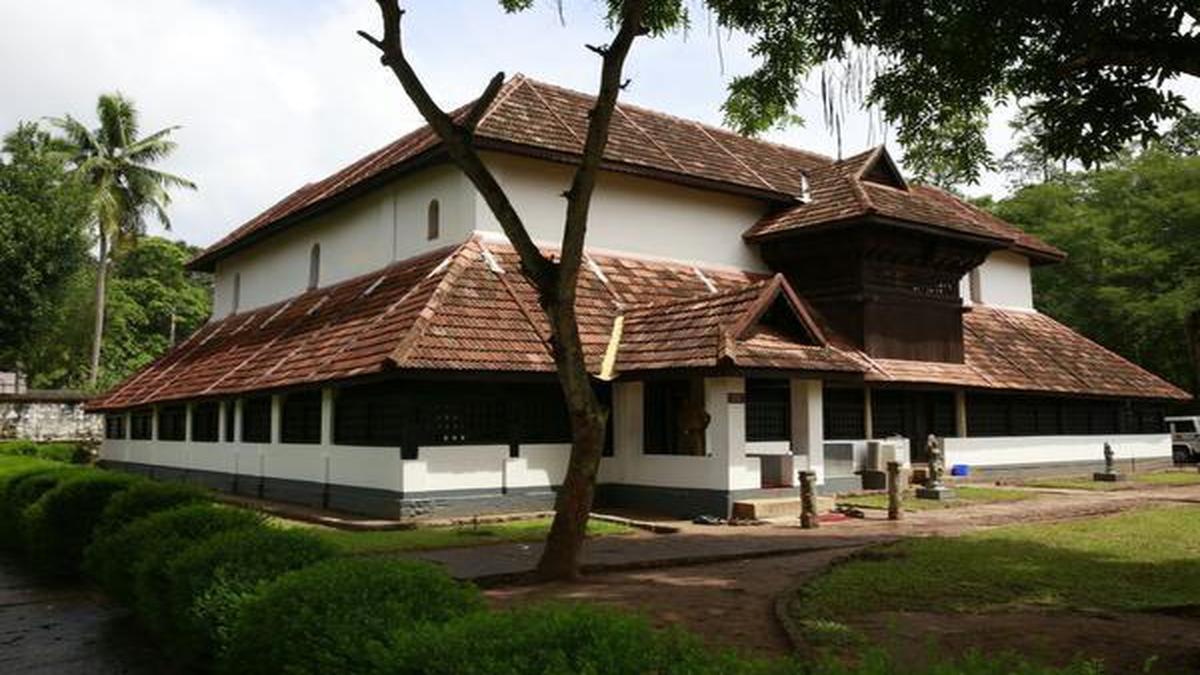 |
| .The renovated Koyikkal Palace keralathehindu.com |
The palace, covering nearly two acres of land, is designed in the conventional nalukettu native architectural style of Kerala. This two-story, boat-shaped structure is square in plan, featuring sloping tiled roofs with distinct wide gables. Surrounded by lush greenery and old trees, the palace offers a serene and comfortable environment. The building boasts large rooms and an open central courtyard, known as the nadumuttam, which is paved with granite slabs. The long veranda around the courtyard is supported by well-carved granite pillars at the corners.
The two-story palace, featuring a sloping tiled roof and distinct gables, houses a unique museum that offers visitors a glimpse into Kerala's past. This includes an era marked by active maritime trade, especially in rare spices, with various foreign countries.
 |
| The Koyikkal Palace kerala tourism.org |
Above image: The palace, originally the residence of the Queen of Quilon who served as the regent of Venad from 1677 to 1684, was carefully restored and now functions under the management of the Department of Archaeology. The first step was taken in 2014 to give this heritage site a face liftusing funds allotted by the Central Government.
The ground floor includes a Nilavara (strong room) with a questionable secret underground passage to a nearby palace at Karuppur. One of the rooms near the entrance houses a Puja room dedicated to the family deity Mallan Thampuran, following a tradition common among many ruling families. The palace's thick walls are made of laterite rocks and plastered with lime to keep the interiors cool. Despite the loss of some old parts such as the padippura, kitchen, oottupura, arappura, and kulappuram due to the long passage of time and poor upkeep, the palace retains much of its historical charm. The architectural features of Koyikkal Palace are truly remarkable. compound walls, and a veranda enclosed with wooden railings on both the ground and first floors, allowing for better airflow from outside.
In July 2014, a significant step was taken to give the palace a major facelift using funds allocated by both the Union and state governments. Special attention was paid to the structural stability of the palace, considering its age and the changing weather conditions, particularly the heavy southwest monsoon rains that affect the region. The palace was closed for four years during the renovation and was reopened in 2018 after substantial restoration work.
Now under the management of the Archaeology Department, Koyikkal Palace houses two museums: a numismatics museum and a folklore museum. The numismatics museum showcases rare and ancient coins, reflecting the rich monetary history of the region. The folklore museum, on the other hand, brings to life the cultural heritage of Kerala, displaying musical instruments and attires used in various traditional dances, including ritualistic ones unique to the state.
Koyikkal Palace is a significant tourist destination. Its rich history is well-preserved through the rare coins and folklore artifacts displayed in the museums. The palace, with its serene environment and architectural splendor, is a living testament to the long-cherished traditions and culture of Kerala, often referred to as "God's Own Country."
A highlight of the museum is its numismatic section, which attracts many visitors with its extensive collection of rare coins. These coins chronicle Kerala's rich history of maritime trade with nations such as Holland, Portugal, Britain, and Rome. Among the treasures are 374 Roman gold coins bearing images of Roman gods and goddesses like Mars, Hercules, Venus, Ceres, and Genius, as well as the ruler Hadrian. A particularly prized possession is the Amaida, a rare Venetian coin believed to have been presented to Jesus Christ.
 |
| Heritage Museum The Koyikkal Palace incredibleindia.gov.in |
In summary, Koyikkal Palace is not just an architectural marvel but also a symbol of Kerala's rich history and cultural heritage. Its restoration and preservation efforts ensure that this historical gem continues to shine, attracting tourists and history enthusiasts alike.
https://en.wikipedia.org/wiki/Koyikkal_Palace
https://www.keralatourism.org/destination/koyikkal-palaceenedumangad/238
https://www.thehindu.com/news/cities/Thiruvananthapuram/koyikkal-palace-to-get-a-facelift/article6206240.ece
_-_Tara_Khothe_or_Star_house.jpg)


