 |
| "Jan. 1877. Empress of India"Queen Victoria. en.wikipedia.org |
 |
| 1957 great Indian rebellion. .slideshare.net |
 |
| 1957 great Indian rebellion slideshare.net |
 |
| first war of independence 1857. bollykiwood.blogspot.com |
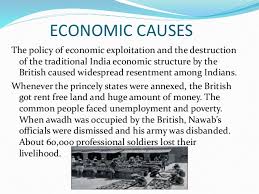
The final spark was triggered by the ammunition for the new model Enfield P-53 rifles that fired Minié balls. They had a tighter fit than the earlier muskets, and used paper cartridges that came pre-greased. To load the rifle, Indian soldier had to bite the cartridge open to release the powder. The grease on these cartridges was said to include tallow derived from beef, which would be offensive to Hindus, and pork, which would be offensive to Muslims. The refusal by the native soldiers provoked the British military officers that caused a huge protest. The other causes added fuel to the fire. https://en.wikipedia.org/wiki/Great_Rebellion. ............
When the first war of independence in 1857 that began in Meerut, MP, that caused a severe headache to the British because of EIC's misrule and land-grabbing binge, was finally suppressed the British East India Company, which had ruled much of India, was dissolved. India became part of the British Empire, a huge source of income went directly to the British treasury and India Govt.'d coffers were almost empty.
In 1877, Benjamin Disraeli, Conservative Prime Minister, had Queen Victoria proclaimed as Empress of India and the purpose was to link the monarchy to become closer with the Indian subcontinent. The Queen took a balanced view of the conflict, and spoke against the atrocities on both sides. She wrote of "her feelings of horror and regret at the result of this bloody civil war", and insisted, urged on by Albert, that an official proclamation announcing the transfer of power from the company to the state "should breathe feelings of generosity, benevolence and religious toleration". The Indian natives were assured of, at her personal request, safeguarding native religions and customs" and guaranteeing religious freedom.
 |
| first Earl of Lytton.viceroy of British India 1877en.wikipedia.org |
When the Royal Titles Bill was brought before Parliament in 1876, it faced opposition from Liberals who feared that the title was synonymous with absolutism. At that time Queen Victoria appeared before Parliament in person for the first time after the death of Prince Albert, to announce the change in royal title. This change of head in the royal family was celebrated Delhi by the British officials which was dubbed as the Delhi Durbar. On 1 January 1877, the celebration was headed by none other than Viceroy, the first Earl of Lytton. It was attended by others -Maharajahs, Nawabs and intellectuals. It was the official transfer of control of British India from the EIC to the Crown administration.
 |
| The Delhi Durbar of 1877en.wikipedia.org |
K. N. Jayaraman


%20(1).jpg)


