The architecture of Hindu temples is not merely a matter of stone and sculpture but a spiritual expression that embodies divinity in physical form. Among the most important structural and symbolic elements of a temple are its pillars and mandapas (halls). These do not just serve as architectural supports; they reflect the unity of religion, politics, history, and philosophy. The pillars symbolize the supremacy of the divine over earthly powers, while the mandapas provide sacred space for worship, rituals, and community gatherings.
 |
| Mythical animal Yali pillared Hall of a South Indian temple Darasuram, TN |
In Hinduism the idea of pillar is to establish the concept that God is supreme and omnipotent. Divinity is greater than other including the king. A stambha or column made of hard stone in temples sometimes bears inscriptions and religious emblems implying divinity is permeating in every part of the place of worship. It means our focus must be on the divinity once you are inside the temple.
It is obvious that from the earliest times, pillars have been revered in Indian culture. They stand as emblems of religious ideals, memorials to monarchs, and representations of cosmic order. In temples, a pillar or stambha often bears inscriptions and carvings of deities, signifying that divinity pervades every part of the sacred complex. For instance, the Dwajasthambam (flag pole) in front of the sanctum represents victory of the divine, while oil lamps or vilakkus signify the triumph of light over darkness. In Kerala temples, tortoise-shaped lamp-stands called ammai vilakku symbolize the primordial support of the universe, integrating the pancha boothas—the five elements of nature: sky, air, fire, water, and earth—each associated with gods such as Paramesvara, Vayu, Agni, Varuna, Vishnu, Bhudevi, and Brahma. Thus, pillars themselves embody cosmic balance and divine energy.
Equally significant are the mandapas—pillared halls that form an integral part of the temple. These halls, varying in size and design, may be square, rectangular, circular, or octagonal. Some are open to allow air and light, while others are closed, creating a solemn atmosphere for rituals. The purpose of mandapas is both practical and spiritual: they accommodate large gatherings of devotees, host discourses, rituals, dances, and festivals, and serve as transitional spaces leading toward the sanctum. In this sense, the mandapa is not merely an architectural unit but a sacred arena where humanity engages with the divine.
Several temples in South India are famous for their mandapas with numerous carved pillars. The Srivilliputhur Andal Renga Mannar Temple in Tamil Nadu, associated with the life of Andal, has exquisitely carved mandapas that depict episodes from the Divya Prabandham. The Meenakshi Amman Temple at Madurai is renowned for its Aayiram Kaal Mandapam (Thousand Pillar Hall), with finely sculpted pillars portraying gods, goddesses, celestial beings, and mythical animals. The Ranganathaswamy Temple at Srirangam also has a celebrated hall of pillars, used during Araiyar Sevai and Vaikunta Ekadasi festivities. Similarly, the Ramanathaswamy Temple at Rameswaram has the world’s longest temple corridor lined with nearly 1,000 pillars, each resonating with artistic brilliance. The Nataraja Temple at Chidambaram, dedicated to cosmic dance, has pillared halls where festivals such as Natyanjali are performed, emphasizing the union of art and divinity.
Outside Tamil Nadu, the Lepakshi Temple in Andhra Pradesh is famous for its hanging pillar, a marvel of Vijayanagara architecture. The Rudreshwara Swamy Temple in Hanamkonda, Telangana, has exactly 1,000 ornate pillars and is listed under UNESCO’s tentative heritage sites. The Virupaksha Temple at Hampi contains mandapas with intricately carved Yalis and celestial motifs that reflect the empire’s grandeur. These examples reveal how rulers across dynasties patronized temple architecture, using mandapas and pillars not only for religious devotion but also as displays of power, artistry, and cultural vision.
Mandapas also carry specific functions and symbolism, with each part compared to the human body. The entrance gopuram stands for the feet, while the garbhagriha (sanctum) is regarded as the head, the seat of consciousness. Between them lie various mandapas: the Mukha Mandapam (porch), the Ardha Mandapam (neck) connecting to the sanctum, and the Maha Mandapam (chest), the largest hall for gatherings. Other notable halls include the Nritya Mandapam at Chidambaram for dance, the Kalyana Mandapam at Madurai where divine weddings are celebrated, and the Yaga Mandapam at Srirangam where sacrificial rituals take place. Each type of mandapa enhances the temple’s sacred rhythm, guiding devotees step by step toward the inner sanctum.
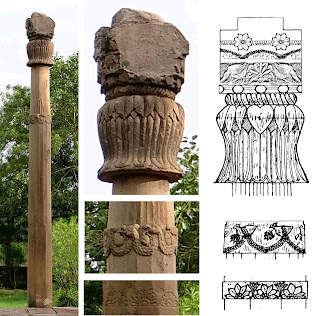
Historically, pillars in India also had political and religious roles outside temples. The Ashokan pillars, erected more than 2,000 years ago, symbolized imperial authority and the spread of Buddhist dharma. The Heliodorus pillar in Vidisha, dedicated to Vasudeva around 113 BCE by a Greek ambassador, stands as one of the earliest known religious pillars in India. These traditions influenced temple stambhas, which came to embody cosmic order and divine energy.
Ultimately, the purpose of mandapas and pillars in Hindu temples transcends their material form. They remind the devotee of the Purusharthas—the four aims of life: dharma (righteousness), artha (prosperity), kama (desire), and moksha (liberation). By entering a mandapa supported by divine pillars, one symbolically leaves behind worldly distractions, focusing instead on the eternal presence of God. The stone columns, rising toward the heavens, embody the link between earth and sky, man and cosmos, human effort and divine grace. Together, they form a sacred architectural language that has guided generations of Hindus on their spiritual journey. Partly based on te old post July 17,2023
 |
| MadapamAndal Renga Mannar Temple,Sri Villiputhur, TN tripadvisor.in/ |
Pillars play a very an important role in various cultures across the globe. So are they in the traditions and cultures across India. They symbolize religious, political and historical perspectives. For the monarchy, they stand as a symbol of victory or power. In politics, they may stand as memorials to the departed leaders of repute or people died for a cause. In the places of worship - in the Hindu temples they symbolize the supremacy of all- pervading God over other things including the king or local head. The pillars made of stone in the front part of the temple carry temple flag and oil lamp implying the presence of divinity where dark forces have no place .
With respect to pancha boothas it is worth mentioning the following life-sustaining elements and divinity:
Eternal Sky/ Ether: Parameśvara - that in which everything is contained. ...
Air: Representing God Vāyu & Hanuman-movement. ...
Fire: Representing Gods, Agni & Shiva – transformation. ...
Water: Representing Gods Varuṇa & Viṣhṇu – preservation. ...
Earth: Representing Goddess Bhudevi & Brahma - creation.
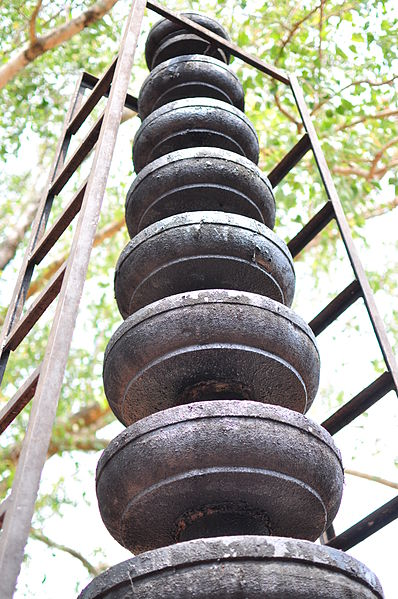 |
| Stone oil lamp, kerala temple, Commons Wikipedia |
 |
| Stone oil lamp (Kal Vilakku), Kerala temple invisstock.com |
Countless Hindu temples across south India have huge halls - mantaps supported by rows of decorative pillars. There are some mantaps on the temple premises that have more than 900 pillars. In Tamil Nadu Srirangam Ranganathar temple and Madurai Meenakshi temple have 1000 pillar mandapams. Calling them 1000 pillar hall (Aayiram Kaal mandapam) is not right and they actually have less than 1000 columns.
 |
| 1000 pillar hall, Ranganathar temple, Srirangam, TN, talesofanomad.com |
Richly carved pillars add beauty and splendor to the pavilion or mandapa highlighting the style of design adopted by the ruling dynasty. A mandapa may have different plan - typically square, rectangle, octagonal or circular and rarely star shaped. It may have outer walls with perforated stone/ lattice windows for light and air circulation or may be open on some or all sides. In temples mandapa is a pillared hall or pavilion for public rituals.
 |
| Lathe turned pillars of Chalukya period, Karnataka facebook.com |
Above image: Veera Narayana temple of Belawadi, Karnataka State
 |
| sculptured pillar with eaves and brackets La pakshi temple, APasoulwindow.com |
 |
| Ranganathar temple, hanging eaves Srirangam,thehindu.com |
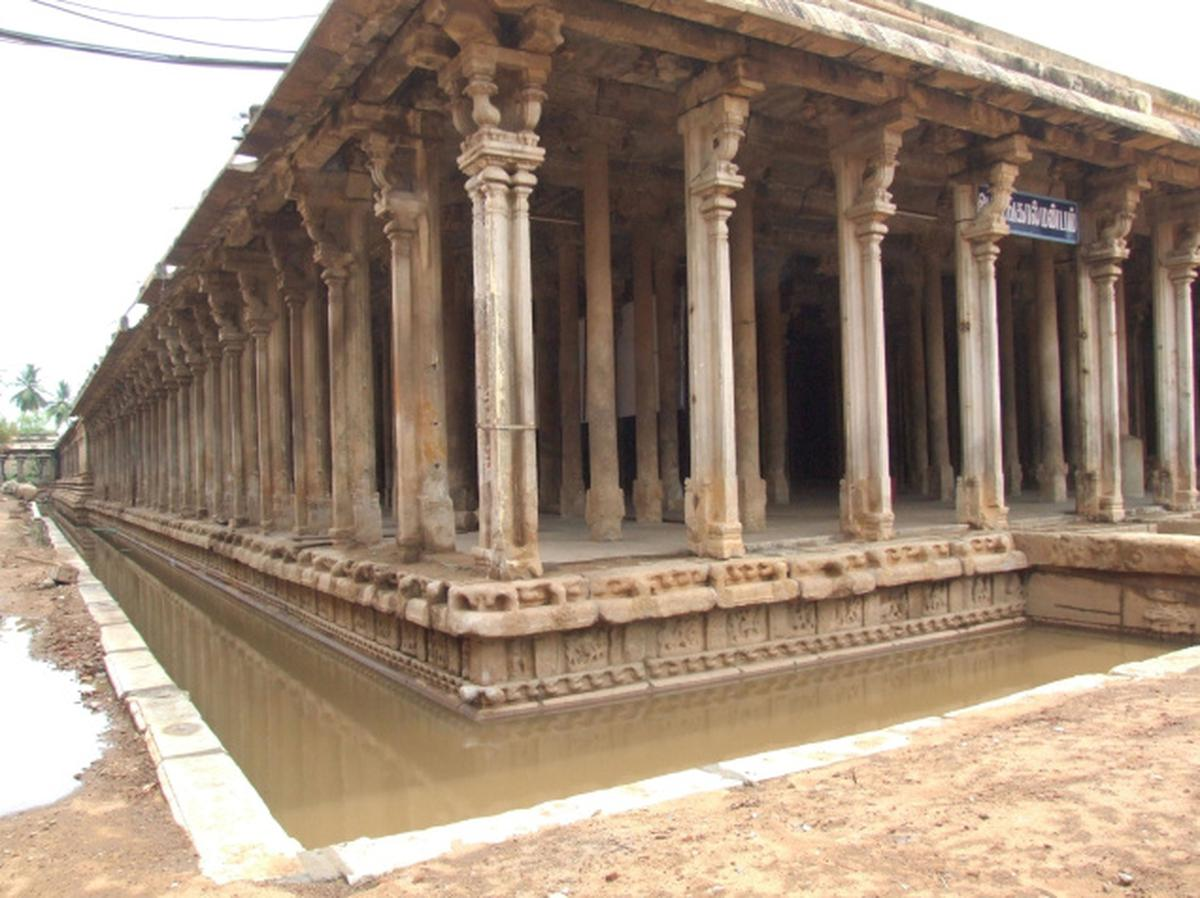
Above image; A huge mandapam at Srirangam Ranganathar temple, TN. A typical mandapa is a portico or colonnaded (series of columns placed at regular intervals) hall that provides space for a large number of worshippers. Dances, religious discourses and some rituals for the festival idols are held here. An important part of Hindu temple architecture. Some temples have multiple colonnaded mandapas in different sizes named as Ardha Mandapa, Mandapa, and Maha Mandapa...
 |
| South Indian temple architecture. adyan.urd.ac.ir |
 |
| Heliodorus pillar 113 BCE , MP. upload.wikimedia.org |
India’s first religious pillar is around 1,900 years old called Garuda pillar built in Vidisha, Madhya Pradesh by a man called Heliodorus, Greek ambassador to the Shunga kings. It is near to the Sanchi Stupa. - Heliodorus dedicated this pillar to god Vasudeva.
Ashoka was first to establish India’s first pillar commemorating his kingship. It is said, he had more than 84000 pillars built to mark the 84000 relics of Buddha across India. All of them were free-standing pillars topped by a royal symbol, thus they have political and religious connotations. Only a handful of them are left today.
 |
| Puthu Mandapam, Meenakshi temple, Madurai. maduraitourism.co.in |
Hence, many Hindu Maharajahs ruled their kingdoms in the name of gods or goddess. The Nayaks of Madurai ruled the kingdom in the name of Goddess Meenakshi. The rulers of Travancore ruled their kingdom on behalf of God Vishnu, Padmanabha Swamy. Naturally, in many parts of a Hindu temple, including the pillars, you can see the stone carved images of god or something related to divinity.
 |
| 1000 pillar hall Meenakshi temple, madurai. seawatersports.com |
 |
| Sculpted pillars at Shesharayar mandapam,Srirangam talesofanomad.com |
Ranga Mandapa or Rangamandapa – A larger mandapa, which can be used for dance or drama, with music
Vimanam stands for the top of the head. This hall may have well-carved stone pillars depicting episodes from the Hindu epics. You seldom will find pillars in the sanctum.
 |
| 1000 pillar corridor, Ramanatha Swamy temple, Rameswaram, TN. |
Above image: The long corridor of 1000 pillars of the Ramanathaswamy Temple in Rameswaram, Tamil Nadu, India..................
Nooru or Aayiram kaal mandapam – Hall of 100 or 1000 pillars. As mentioned above, only temples that can be counted on the fingers have 100 or 1000 pillar mandapams. In Tamil Nadu, Kanchipuram, Madurai, Rameshwaram, Chidambaram and Srirangam have temples with massive halls supported by 1000 pillars or 100 pillars. Rudreshwar temple in Telangana is popular for a 1000 pillar mandapa. A few are are listed as UNESCO world heritage sites. A Mandapam (hall) with 1000 pillars made entirely of hard rock is an architectural grandeur. The 1000 pillar hall in the Ramanathaswamy temple at Rameshwaram, Tamil Nadu forms the longest covered corridor in the world.
Other mandapams are as follows:
Yaga Mandapam – Mandapam where Homa/Yaga are performed occasionally. These are big enough to accommodate many people. Many temple do not have this type of hall and may build temporary pandal for this purpose with lots of open space to avoid fire mishap.
Manjana Mandapam – Bathing rituals for some special deities are done here for theerthavari. The tradition in Kerala has been that the uchava idol is taken to the nearest waterbody for this ritual marking culmination of a festival, Same is true of Tamil Nadu temples.
Murasu Mandapam – This hall is meant to beat drums /Murasu informing starting of any temple rituals. It is specifically designed so that the drum beats will be reverberating far and wide. The temple in kerala has hall called Kotturapura meant for beating drum during festival period.Example: Thrikodithanam Mahavishnu Temple.
Kalyana Mandapam –There is no such a specific mandapam in temples to hold the celestial wedding of the goddess and god. Srinivasa Kalyanam, Tirupati and Meenakshi Sundareswarar Kalyanam, Madurai are very famous and are held yearly in a specific hall.
A devout Hindu must have a purpose besides his given or chosen duty. The purpose of life for Hindus is to achieve four aims, called Purusharthas . comprising dharma, kama, artha and moksha. They impart the needed experience to lead a moral and ethical life. The Hindu temples help them focus on their goals including renunciation and salvation free from rebirth. Partly based on the old post July 17,2023 navrangindia.blogspot.com
https://learningthursdays.com/temple-mandapams/
https://www.templepurohit.com/hindu-temple-architecture-structure-human-body-symbolism
https://en.wikipedia.org/wiki/Mandapa
K. N. Jayaraman (Author: navrangindia.blogspot.com )


